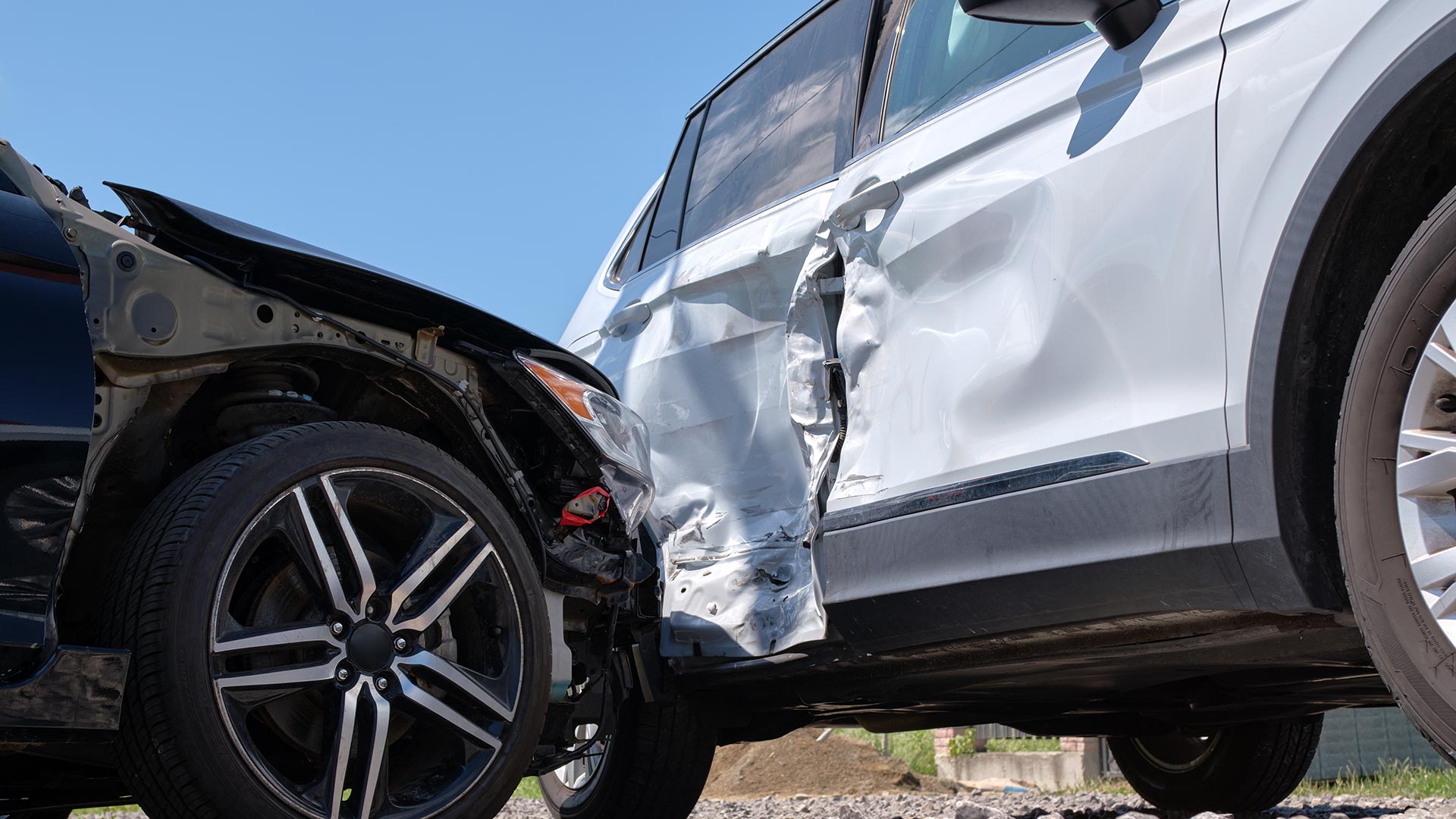
Law360 Canada (July 20, 2026, 12:35 PM EDT) -- No other machines used by so many people in Canada are as dangerous as cars, trucks and motorcycles. Globally, approximately 1.19 million people die each year in road crashes, which are the leading cause of death for children and young adults aged 5-29 in the rest of the world (see World Health Organization, Road traffic injuries, July 2026).
As Alberta invites the world to its cities and towns, it has historically relied on two justice systems to encourage responsible driving and reduce risk beyond the fact that Canada has more space to drive. The criminal and regulatory justice system, operated at the cost of the taxpayer, enforces provisions in the Criminal Code and the Traffic Safety Act related to dangerous and impaired driving, careless driving and a host of other regulator offences. In contrast, the civil justice system, operated at the cost and benefit of the victims, enforces the common law tort system.
This dual system of justice has been working well in Alberta compared to Saskatchewan and Manitoba.
Other provinces that have eliminated the civil justice system, such as Saskatchewan and Manitoba, operate on pure no-fault schemes that insulate bad drivers from both financial and emotional responsibility, creating moral hazard, leading to increased accident frequency and severity.
The numbers bear this out. In Saskatchewan, there is a 338 per 100,000 casualty rate, and in Manitoba there is a 556 per 100,000 casualty collision rate compared to Alberta at 297 per 100,000, attributable to diminished driver accountability in Saskatchewan and Manitoba. The civil justice system serves a valuable function in public safety as there is a deterrence factor in being served with both a civil claim and a ticket or criminal charge (see Canadian Motor Vehicle Traffic Collision Statistics: 2021. Note: 2021 is selected as a comparator year as Alberta changed the reporting rules for minor injuries in 2022. 2022 is the most recent year available in Alberta).
Saskatchewan and Manitoba were in no way leaders to no-fault schemes in North America, and there has been a steady march away from pure no-fault from our neighbours to the south. It is therefore hard to understand why Alberta might want to start the social experiment over again unless it is to signal a desire to be more like Saskatchewan and Manitoba.
The first pure no-fault statute was enacted in 1971 by the Massachusetts legislature as they were promised it would reduce premiums. Massachusetts was persuasive, as they had previously been a leader pioneering mandatory insurance in North America (James M. Anderson et al., The U.S. Experience with No-Fault Automobile Insurance: A Retrospective, 19-62 9 (2010)).
During the 1970s, some 16 or so states tried no-fault benefits and established thresholds for the right to bring tort and civil justice against the person causing the injury. The number of benefits varied, as did the thresholds. Most statutory frameworks had monetary thresholds; under these frameworks, if the injured party had damages above a certain amount, the person could access the civil justice system and claim against the bad driver directly, but if the damages were below the threshold, the person could not access the civil justice system and the bad driver was not civilly accountable.
Some of the frameworks combined a monetary threshold with an injury threshold under which a person could access the civil justice system if they suffered a particular type of injury. In the 1990s, enthusiasm for no-fault began to wane in the United States, primarily because premium reductions expected to accrue with no-fault were not consistently realized, and the loss of accountability and access to civil justice was not politically advisable (Anderson, at 44-49). Victims of bad drivers generally want the right to access both the civil and criminal justice system, even if the police pursue the criminal and regulatory charges.
As of 2024, none of the states operate with the complete loss of civil rights and responsibilities like the provinces of Saskatchewan and Manitoba, although 12 states and Puerto Rico have a hybrid type of no-fault system with some restrictions to the benefits of the civil justice system.
The 12 states with some residual elements of no-fault system as of 2024 are Florida, Hawaii, Kansas, Kentucky, Massachusetts, Michigan, Minnesota, New Jersey, New York, North Dakota, Pennsylvania and Utah. To be more detailed, Kentucky, New Jersey and Pennsylvania offer a choice of no-fault or access to the civil justice system; Florida, Michigan, New Jersey, New York and Pennsylvania offer access to civil justice in the case of certain types of injuries, and the rest require damages above a certain monetary threshold (Robert H. Jerry II and Douglas R. Richmond, Understanding Insurance Law, Seventh Edition, 2025, page 978-979).
Ontario repealed its no-fault experiment in 1996, returning civil rights to Ontarians after only two years. Colorado repealed its no-fault statute in 2023; Nevada repealed in 1980; Georgia repealed in 1991; and Connecticut repealed in 1993. Pennsylvania repealed in 1984 but then reenacted a choice no-fault statute in 1990. Florida’s statute was scheduled to sunset in 2007 but was reenacted in 2008 and the last bill to eliminate it was vetoed by the governor. The Illinois Supreme Court held that their no-fault statute was unconstitutional on the ground that it did not apply to all types of vehicles (Grace v. Howlett, 51 Ill. 2d 478, 283 N.E. 2d 474 (1972)).
As Alberta considers this year whether access to civil justice will be allowed to the victims of serious and fatal accidents in the future, the writer hopes the above history will help make the best choice.
Travis Bissett K.C. has 19 years of continuous legal practice across Alberta and on the board of the Canadian Bar Association. He received the 2022 Volunteer of the Year award from the Lethbridge Legal Guidance and currently serves as the president of the Lethbridge Bar Association and president-elect of the Alberta Civil Trial Lawyer Association. He is also a contributing editor to the Wills and Estates Practice Manual of the Legal Education Society of Alberta. Bissett can be reached at tbissett@stringam.ca.
The opinions expressed are those of the author and do not reflect the views of the author’s firm, its clients, Law360 Canada, LexisNexis Canada, or any of its or their respective affiliates. This article is for general information purposes and is not intended to be and should not be taken as legal advice.